Essential Tools Every DIY Homeowner Needs
By Mac · 6 min read
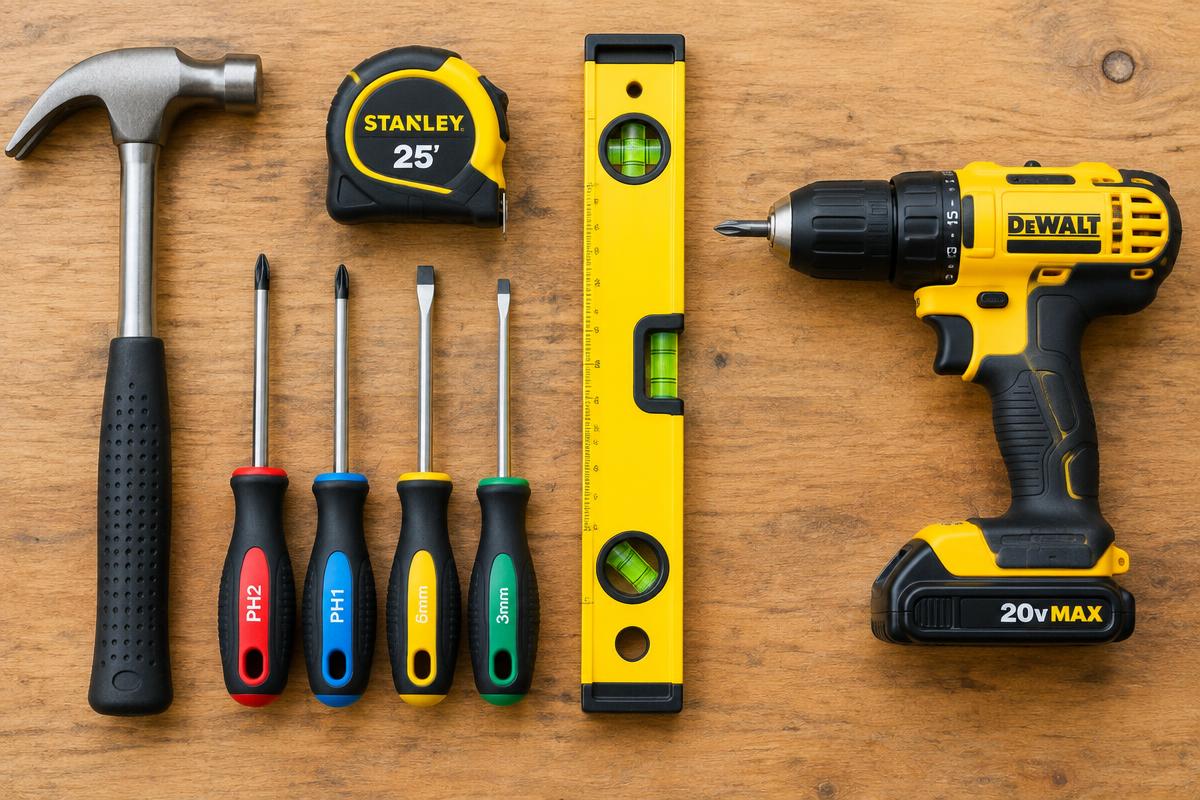
Walk into any hardware store and it's easy to feel overwhelmed. Aisles of gadgets promise to make every job easier, but the truth is that a small, well-chosen set of tools will cover the vast majority of projects around the house. Whether you just bought your first home or you're finally ready to stop calling someone for every loose cabinet hinge, this guide walks you through the basics worth owning.
The goal isn't to buy the most expensive option. It's to buy reliable tools you'll actually reach for, store them where you can find them, and add to the collection as real projects come up.
1. A Claw Hammer
A 16-ounce claw hammer is the classic all-rounder. It's heavy enough to drive nails into framing lumber but light enough for hanging pictures. The claw side pulls nails and pries apart small pieces of trim. Look for a handle with a comfortable, non-slip grip, since that makes a bigger difference than most people expect.
2. A Tape Measure and a Level
The old saying "measure twice, cut once" exists for a reason. A 25-foot tape measure with a sturdy lock handles everything from furniture placement to room dimensions. Pair it with a 24-inch level for shelves, frames, and curtain rods. Many people also like a small torpedo level that fits in a pocket for tight spots.
3. A Screwdriver Set
You'll use screwdrivers constantly: tightening door hinges, replacing outlet covers, assembling furniture, and opening battery compartments. A set with a few sizes of Phillips and flat-head drivers covers most needs. A multi-bit screwdriver is a great space saver if you'd rather keep one tool in a kitchen drawer.
4. A Cordless Drill/Driver
If there's one power tool worth buying early, this is it. A cordless drill drills pilot holes, drives screws quickly, and with the right bits can even mix small batches of paint or thinset. A 12V or 18/20V model is plenty for home use. Buy one with two batteries so you're never stuck waiting for a charge in the middle of a job.
5. Pliers and an Adjustable Wrench
Needle-nose pliers grab small parts and bend wire, while slip-joint pliers handle general gripping. An adjustable wrench takes care of nuts and bolts in many sizes, which is especially handy for plumbing fittings under sinks and for tightening furniture hardware.
6. A Utility Knife and Stud Finder
A retractable utility knife opens boxes, scores drywall, trims carpet, and cuts caulk tubes. Always keep fresh blades on hand; a dull blade is more likely to slip. A basic electronic stud finder helps you locate framing behind walls, so heavy shelves and TVs are anchored securely instead of relying on drywall alone.
7. Safety Gear
Safety glasses, work gloves, hearing protection, and a dust mask are not optional extras. They're inexpensive and they let you work with more confidence. Keep them in the same bin as your tools so you never skip them because they were "in the other room."
Storing Your Toolkit
A simple toolbox or a wall-mounted pegboard keeps everything visible and easy to grab. Put tools back after each project and you'll save time on the next one. A small parts organizer for screws, nails, and wall anchors is a cheap upgrade that pays off quickly.
- Start with the basics above, then buy specialty tools when a specific project calls for them.
- Read the manual for any power tool before using it.
- Choose comfort and reliability over flashy features.
With these tools in hand, you'll be ready for most small repairs and weekend projects. The best way to build skill is to start with something simple, take your time, and learn as you go.